Greece ↔ Japan · 4 min read
Two food cultures, one respect for the seasons
Greece and Japan cook differently. Yet both understand that when ingredients are chosen with care, they do not need to be hidden.

Orizon Essence began between Greece and Japan. Not because the two cuisines are the same, but because we recognized something familiar in the way each approaches food.
Both pay attention to the season. Both remain connected to the places where ingredients are produced. And both understand that a good ingredient often needs less intervention, not more.
A shared instinct
Different traditions, a natural conversation
Greek food is shaped by olive oil, vegetables, wild greens, pulses, herbs, grains and cheese. Japanese food grew from a different landscape and history, with rice, seafood, seaweed, soy and dashi at its centre.
The cooking methods and flavours remain entirely their own. What connects them is the attention given to the ingredient itself.
Japanese cooking often brings forward the natural flavour of seasonal food. In Greece, vegetables, herbs, grains and pulses are also prepared in ways that allow their character to remain clear, with olive oil quietly connecting many of them.
It is a shared instinct: begin with something good, treat it carefully and know when enough has been done.
Season
The calendar can be tasted
In Japan, shun describes the moment when an ingredient is considered to be at its best. Spring brings young vegetables. Summer brings tomatoes, cucumbers and ayu. Autumn arrives with mushrooms, chestnuts and persimmons. Winter belongs to daikon, leeks, oysters and buri.
Greece follows a different calendar, but the habit is familiar. Tomatoes, courgettes and aubergines fill the summer table. Cooler months bring wild greens, pulses and slower cooking. Herbs, fruit and vegetables appear as the land offers them.
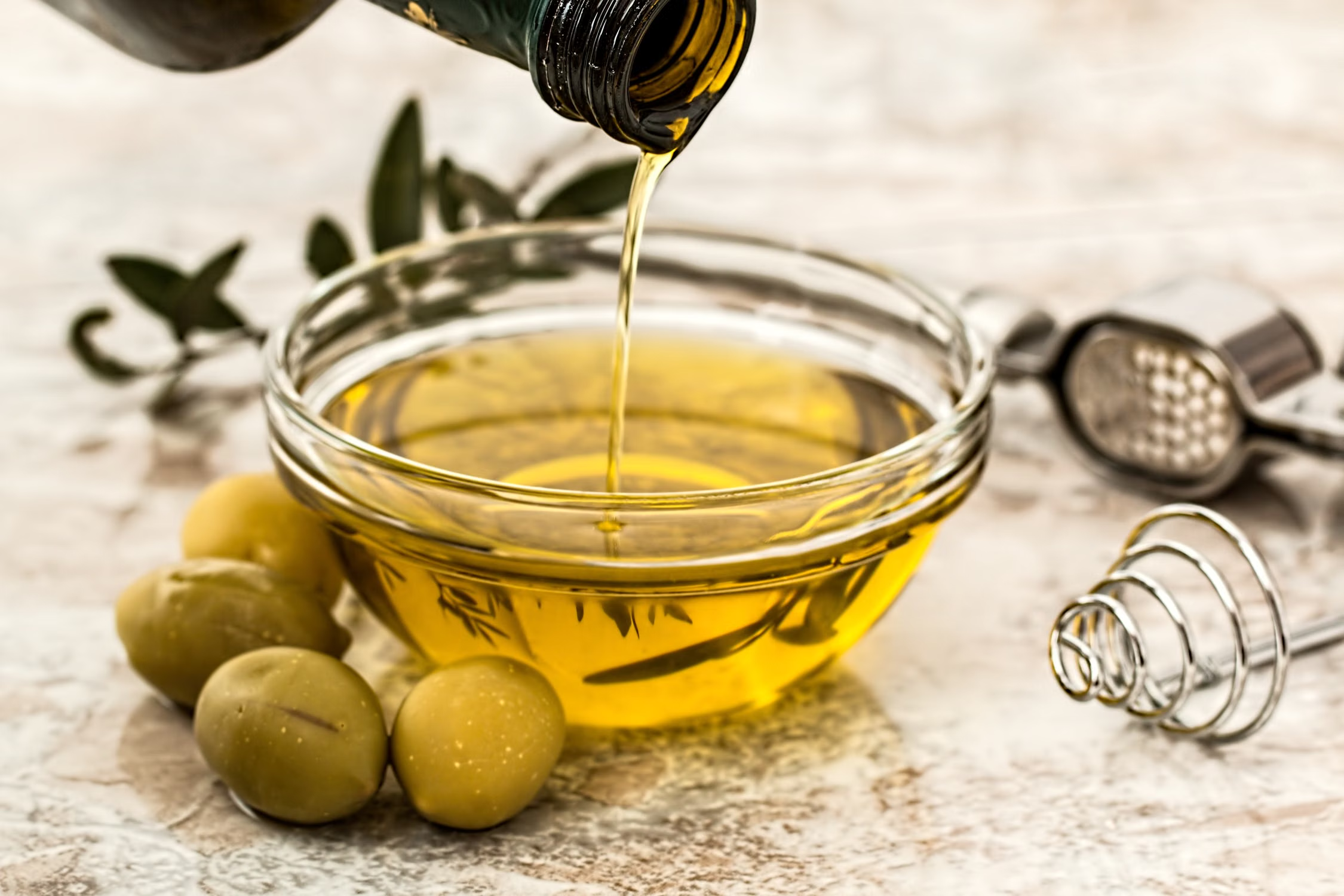
Olive oil carries its season too. Greener fruit can create vivid herbal aromas, bitterness and a peppery finish. Riper olives may produce something softer and rounder. Every harvest holds a small memory of that year—its sun, rain and timing.
Simplicity
Simple food asks for more care
When a dish contains only a few ingredients, each one becomes easier to notice. There is nowhere for a tired vegetable, poorly handled fish or old olive oil to hide.
A Greek tomato with salt, herbs and olive oil may look effortless. So can chilled tofu with a careful garnish or a piece of fish grilled with little more than salt.
Simplicity is not about doing nothing. It is about knowing when enough has been done.
Behind that apparent ease is attention: someone tended the tree or caught the fish, chose the right moment and handled the ingredient well before it reached the plate.
At the Japanese table
Olive oil can enter quietly
Bringing olive oil into Japanese cooking does not mean pouring it over every dish. Often, a few drops are enough.
Gentle and freshHiyayakko, seasonal tomatoes, steamed vegetables, sashimi or lightly prepared fish.
Medium and fruityGrilled white fish, aubergine, mushrooms, roasted roots or a simple soup.
Bold and pepperyGrilled meat, pulses, bitter greens, warm bread or dishes with miso.
One simple testTaste the food first. Add a little oil, then taste again. Notice what changed.
A good pairing should feel like a conversation. The oil may add aroma, softness or a gentle bitterness, but the original ingredient should still have a voice.
The meeting place
Something new does not have to feel forced
Food cultures have never remained still. Ingredients travel, people move and new habits enter the home slowly—usually through ordinary meals rather than dramatic inventions.
The aim is not to make Japanese food Greek. It is to understand what olive oil can add while respecting the balance of the original dish. The same is true in the other direction: yuzu, shiso, miso or kombu can enter a Mediterranean kitchen without erasing what was already there.
This is where Orizon Essence finds its purpose. An oil’s journey is not complete when the bottle arrives in Japan. It becomes meaningful when it is opened, tasted and given a natural place in someone’s cooking.
The grove gives the oil its beginning. The Japanese table gives it a new setting. What connects them is not a desire to make two cultures the same, but a shared belief that food deserves attention.
The horizon is not where two places end. It is where they begin to meet.